
A Marketing & Communications Career Well Traversed: Where Legacy and Lessons Meet

Updated: 6 days ago
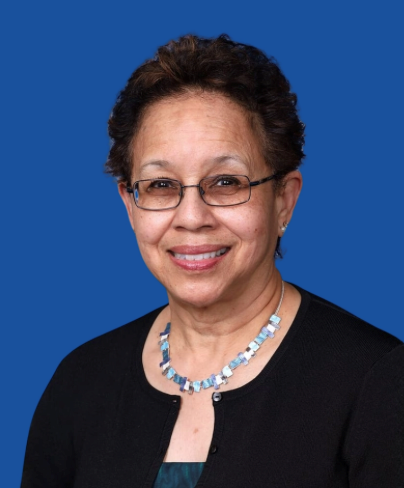
Meet Patricia Riley, MBA: marketing and operations maven, entrepreneur, office manager, networker, community leader and, above all, a genuinely good person.
I’ve known Pat since 2019 when we connected at a senior care networking event and have enjoyed getting to know her both professionally and personally.
I also had the honor of accepting her invitation to join the PR Committee she oversees for Coachella Valley Volunteers in Medicine, which gave me an even closer look at how she works.
Smart, quick-witted, funny, and remarkably organized, Pat is someone who sees a project through, while keeping everyone else moving right along with her.
She has worn a lot of hats throughout her career in marketing, business development, communications, operations, and community leadership. Today, however, she gets to wear one she has more than earned: the interviewee.
This conversation is her opportunity to share the insights, lessons, best practices, and knowledge she has gathered along the way.
Call it experience. Call it wisdom. Call it the perspective that only comes from a career well run.
For me, this interview is really about where legacy and lessons meet.
As Pat prepares to retire at the end of this year, she and her husband are ready for their next chapter and the adventures ahead. Before they go, I wanted to give her the microphone and ask what a career like hers has taught her, what she would pass along, and what she hopes others carry forward.
Pat’s career has taken her through some of the most recognizable names in healthcare, including HCA HealthONE, Centura Health, Saint Joseph Hospital, Good Samaritan Health Systems, University of Colorado Hospital, St. Mary’s Hospital and Regional Medical Center, the Eating Disorder Center of Denver, and Hazelden Betty Ford Foundation.
Across those organizations, and through consulting work along the way, she built more than two decades of experience in marketing, business development, and corporate communications.
Today, she brings that experience to Custom Care Solutions in Palm Desert, where her role blends operations, client care, community relations, and marketing, while continuing to serve the Coachella Valley through nonprofit board leadership.
Looking Back at the Career That Shaped Her
Julie: When you look back over more than 20 years in healthcare marketing, business development, and communications, what experiences most shaped the way you think about marketing today?
Patricia: While working full-time for an accounting firm, I decided to go back to school to get my MBA. Because school was my priority, I quit my job and took a part-time job so that I could focus on my studies. After graduating 18 months later, I was hired as the public relations manager for a hospital.
Taking this step to further my education is what lead me to my career in healthcare and the woman who hired me became my mentor. Without her mentorship and friendship, I probably wouldn’t have stayed in healthcare or launched my own consulting firm.
I learned that it’s never too late to further your education and finding a mentor who gives guidance, shares their knowledge and network, and offers support to help you grow personally and professionally were the keys to my success.
Julie: Mentors really are a game changer! So, let’s dive into some marketing dynamics; was there a point in your career when you realized marketing was about much more than promotion or communications? What happened, and what did that experience teach you?
Patricia: While taking my first few calls from news reporters, I learned that a crucial component of effective communication is the collaborative efforts between the leadership team and the risk manager in managing media inquiries. This collaboration is indispensable when formulating key messages and talking points that are adaptable to various potential scenarios.
While I have had to manage numerous media inquiries throughout my career, the most memorable ones include an investigation initiated by the Office of the Inspector General, an inadvertent medication administration error, the shooting of a security guard in the hospital’s emergency room, the disappearance of a patient from the mental health floor, and the groundbreaking ceremony for a new hospital built after the sunsetting of the Certificate of Need law in Colorado.
Each of these situations necessitated a well-prepared communications strategy. Furthermore, it was crucial to ensure that the designated spokespersons were adequately trained on the key messages and talking points and were comfortable engaging with reporters and journalists. By establishing a comprehensive communications plan, organizations can effectively manage media inquiries and preserve public trust during challenging times.
Julie: Those are the kinds of powerful experiences that really test whether communication strategy is just theory or whether it actually works under pressure. I know you are cool under crisis, but now I know even more so because you’ve been there, done that.
The Marketing Lessons That Stayed With Her
Julie: Of all the marketing lessons you have learned throughout your career, which ones have proven true again and again, regardless of the organization or situation?
Patricia: The principle that I’ve learned throughout my career is that a product or service, regardless of the organization or situation, must provide value to consumers. And, this value can be achieved by consistently exceeding customer expectations.
Julie: What is something you believed about marketing earlier in your career that experience eventually caused you to rethink?
Patricia: Early on in my career and without a complete understanding of the true meaning of marketing, I believed that it was promotion--the glitzy stuff (TV ads, radio spots, billboards, etc.). I later learned that marketing is more than promotion. It’s more than reach, frequency, and impressions.
I learned that promotion is just one tactical subset that focuses on short-term communication and visibility. I learned that marketing is a strategic process that encompasses the 4 Ps – product, price, place, and promotion.
Julie: I think a lot of marketers learn that lesson somewhere along the way. Promotion may be the most visible part, but, agreeably, it is only one part of the strategy.
People, Relationships and Community
Julie: You have spent much of your career working in environments where trust and relationships matter enormously. What have people taught you about marketing that you could never have learned from a textbook or marketing plan?
Patricia: Building trust and relationships with your customer can only be accomplished through excellent customer service—providing products that fulfill every promise; offering fast, helpful, and human-oriented support to solve problems, and listening to feedback and criticisms to make improvements on what was learned. Doing all of these things well, will result in your customer’s trust and, ultimately, loyalty.
Julie: And that trust really does come from the experience people have with the organization, not just what the organization says about itself. Your career has also included significant community and nonprofit involvement.
How has serving your community changed the way you think about communication, reputation and connecting an organization with the people it serves?
Patricia: That community connection is especially relevant at CVVIM, where the organization itself notes that many patients still learn about its services through word of mouth, despite broader advertising and outreach efforts.
Currently, I serve on the board of directors for Alzheimer’s Coachella Valley and Coachella Valley Volunteers in Medicine. Both organizations have limited resources and share the same communication objectives: enhancing awareness, visibility, and participation while ensuring the organizations’ financial sustainability.
The communication challenge lies in effectively reaching patients, program participants, and individual/corporate donors/sponsors, particularly in the face of political and economic uncertainty.
Through my interactions with the board members, I have helped them to understand that even though we have limited resources, tracking and analyzing data from all mediums (surveys, in-person feedback, website, social media, and advertising) and identifying key messages and talking points by audience are essential to developing effective communications strategies and tactics.
Julie: That is such an important point, especially for organizations working with limited resources. You may not be able to do everything, but you still have to understand who you are trying to reach and what the data is telling you.
What She Would Tell the Next Generation
Julie: For someone entering marketing today, what do you think they need to learn that cannot be taught simply by mastering platforms, technology, or the latest marketing tools?
Patricia: To achieve success, it is imperative to cultivate a genuine passion for your customers.
Authentic care for your audience translates into authentic storytelling, rather than repetitive sales tactics. Your passion will enable you to accurately assess and resolve customer problems, while inspiring innovative and memorable communication strategies and tactics.
Julie: I love that because tools and platforms keep changing, but understanding and genuinely caring about the people you are trying to reach never really goes out of date.
If you could sit down with Pat at the beginning of her career, knowing everything you know now, what would you tell her to worry less about, and what would you tell her to pay much more attention to?
Patricia: To my younger self, I would convey that life challenges are opportunities for personal and professional growth and resilience. Instead of succumbing to discouragement after a failure, I would say, view each setback as a valuable learning experience. By adopting this mindset, you will not only enhance your professional capabilities but also cultivate a more fulfilling personal life.
Julie: That is one of those lessons that probably makes much more sense looking back than it ever does while you are actually living through it. It really is a mindset – an intention.
The Memories, Meaning and Lessons She Leaves With Us
Julie: When you think about the moments in your career that you remember most fondly, which ones gave you some of your greatest lessons about work, marketing, or life?
Patricia: A specific role comes to mind for this question. I was the director of marketing and public relations, overseeing a department of nine individuals. The most valuable lesson from this role is that marketing is a collaborative endeavor that requires a diverse team of individuals with varying skills, backgrounds, and expertise, all united by a shared objective.
Julie: Teamwork makes the dream work. Almost an overrated slogan now, but still rings true. Good marketing really is rarely the work of one person. It depends on different strengths coming together around the same goal.
As you prepare for this next chapter, what is something you have learned, believed, or experienced that we have not talked about, but that you would most like to pass along?
Patricia: As a woman of color, my extensive travels and residence in numerous cities across the United States and internationally, coupled with my professional experiences, have provided me with exposure to opportunities that many individuals have not had.
Naturally an introvert, I have had to venture beyond my comfort zone to take advantage of these opportunities. For those embarking on their careers or recently assuming a new role, I encourage you to step out of your comfort zone. Be confident in your knowledge and skills and utilize every available resource to get through each new opportunity or challenge that life brings you.
The CMO Marketing Mindset Close
It's time to wrap up this month's interview and that answer is the best close I could ask for from a guest.
Pat, thank you for saying yes to this conversation and for sharing the lessons, memories and mindset that came with such a well-traveled career. I have known you long enough to know there is plenty more wisdom where this came from, but I suppose retirement means I should stop assigning homework. 😉
I love that you closed with stepping outside your comfort zone. It feels fitting for a career shaped by growth, mentorship, leadership, and opportunity.
Now go enjoy the next chapter with your husband. Preferably with fewer meetings!
A Note From Your Editor
A career is more than the work we complete. It is also what others carry forward because we were willing to share what we learned.
The tools change. The platforms change. The marketing jargon changes far more often than any of us asked for. But trust, value, collaboration, preparation, and a willingness to keep learning still matter.
So, I’ll leave you readers with this:
Are you intentionally building your own legacy, and are you creating opportunities to mentor or open doors for someone coming up behind you?
All my best,
Julie Fisher | CEO & Fractional CMO
Fisher Marketing Services LLC provides Fractional CMO services that build comprehensive marketing plans grounded in strategic marketing principles to create clarity, target ideal clients, and increase revenue.

